Love Is Blind, But Your Process Table Shouldn't Be: Inside Our Daemon Couples Counseling Session
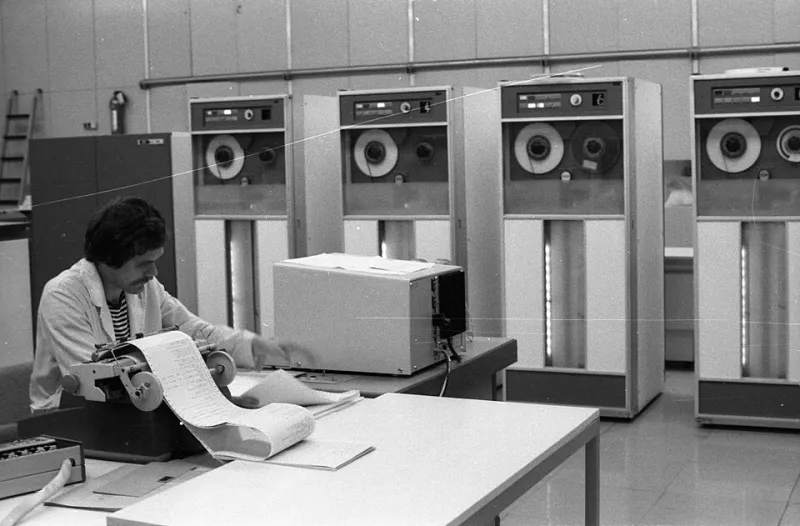
Photo: FOTO:Fortepan — ID 76098: Adományozó/Donor: Erdei Katalin. archive copy at the Wayback Machine, CC BY-SA 3.0, via Wikimedia Commons
Reality TV has given us dating shows for farmers, for people who marry sight unseen, and for folks who fall in love in pods. What it has never given us — an oversight we decided to fix immediately — is a show for sysadmins and the background processes they've been cohabitating with since the Obama administration.
So we did it ourselves. We recruited three working sysadmins from across the country, sat them down on a virtual couch with veteran SRE and professional third wheel Marisol Vega (18 years in the trenches, currently keeping a healthcare giant's infrastructure from falling over), and asked one question: do you actually know what's running on your boxes, and is this relationship working?
The results were funnier than they had any right to be. And, more usefully, they contained a lesson every reader of this site should take home: your process table is a shared apartment, and some of your roommates have been eating your RAM for a decade without introduction.
Contestant #1: Dana and the rsync Job She Forgot She Proposed
Dana runs infrastructure for a mid-size logistics company outside Columbus. Her mystery cohabitant: an rsync daemon she configured in 2017 for a backup migration that, as far as anyone can tell, completed in 2018.
"I genuinely forgot it was there," she admitted, laughing. "It just... syncs things. To a bucket. Every four minutes. I think the bucket is still being paid for?"
Marisol's compatibility score: 9/10. "Honestly? This is the healthiest relationship on the show. It's quiet, it does its job, and nobody touches it. My only note is that Dana should write down that it exists before she changes jobs and leaves it as a haunted artifact for her successor."
Friction point: the daemon is syncing a directory that's grown to 400GB, mostly logs nobody has opened since the last presidential administration. Marisol's prescription was a scope review, not a divorce.
Contestant #2: Marcus and His Toxic situationship With a Monitoring Agent
Marcus, a sysadmin at a Denver-based SaaS company, is living with a third-party monitoring agent that was installed by a vendor in 2021 and never fully removed after the contract lapsed.
"We don't use the vendor anymore," Marcus explained. "But the agent is still phoning home. To a dead endpoint. Every thirty seconds. It's been retrying for two years."
Marisol's score: 2/10, and she didn't mince words. "Marcus, this is not a relationship, this is a stalker. This process is consuming CPU, generating error logs, and contributing nothing. This is the textbook definition of a zombie you keep around because killing it feels risky."
The counselor's advice: stage the breakup. Snapshot the package's file list, disable the service in a canary environment, watch for a week, then roll it out. "You will feel lighter. Your logs will feel lighter. Everyone wins."
Contestant #3: Priya and the Cron Job She's Afraid to Ask About
Priya, who manages servers for a regional bank (she asked us to keep the name out of this), has a cron entry she inherited from a predecessor who left the company in 2019. It runs a shell script at 2:47 a.m. The script is 1,100 lines of uncommented bash. Nobody knows what it does.
"It fails sometimes," she said. "And when it fails, I get an email, and I panic, and then it works the next night, and I move on. We've been in this loop for three years."
Marisol's score: 5/10, with a strong warning. "This is the classic long-term relationship where neither partner talks anymore. It's not broken, so you don't touch it. But you also don't understand it, and that's the dangerous part. The day it fails for real, you'll have no idea what functionality you just lost."
Her recommendation: not deletion, but documentation. Spend one paid afternoon annotating the script line by line. "You don't have to fix it. You just have to know what you're living with."
The Counselor's Closing Argument: Audit Before You Judge
After the taping, we asked Marisol for her universal advice, and she gave us something better than reality-TV drama: a three-step audit any sysadmin can run this week.
- Take attendance.
ps aux,systemctl list-units --type=service, and a fullcrontab -lsweep across every user. Export it. You can't evaluate relationships you don't know exist. - Check the last contact. For each process, ask: when did this last do something useful? Check logs, file modification times, network connections. Processes that haven't produced evidence of value in a year are suspects.
- Schedule the conversation. You don't delete anything in step one. You document it. Every mystery process gets an owner, a purpose, and a note in your runbook — or a date for its departure.
"People treat their process tables like junk drawers," Marisol told us as we wrapped. "Everything in there was put there by somebody for a reason. The problem is nobody remembers who or why. An hour of auditing saves you a 3 a.m. incident where you discover the weird thing you almost deleted was load-bearing."
Dana, Marcus, and Priya all left the session with action items and, remarkably, no breakups — though Marcus's vendor agent is on borrowed time. As for us, we walked away with a new editorial policy: every quarter, this site runs its own audit. And if our own process table hides anything embarrassing, you'll read about it here first.
Because that's the thing about daemons. They never sleep, they never complain, and they never introduce themselves. The least we can do is learn their names.